Built in layers. Finished in one.
Sinterra
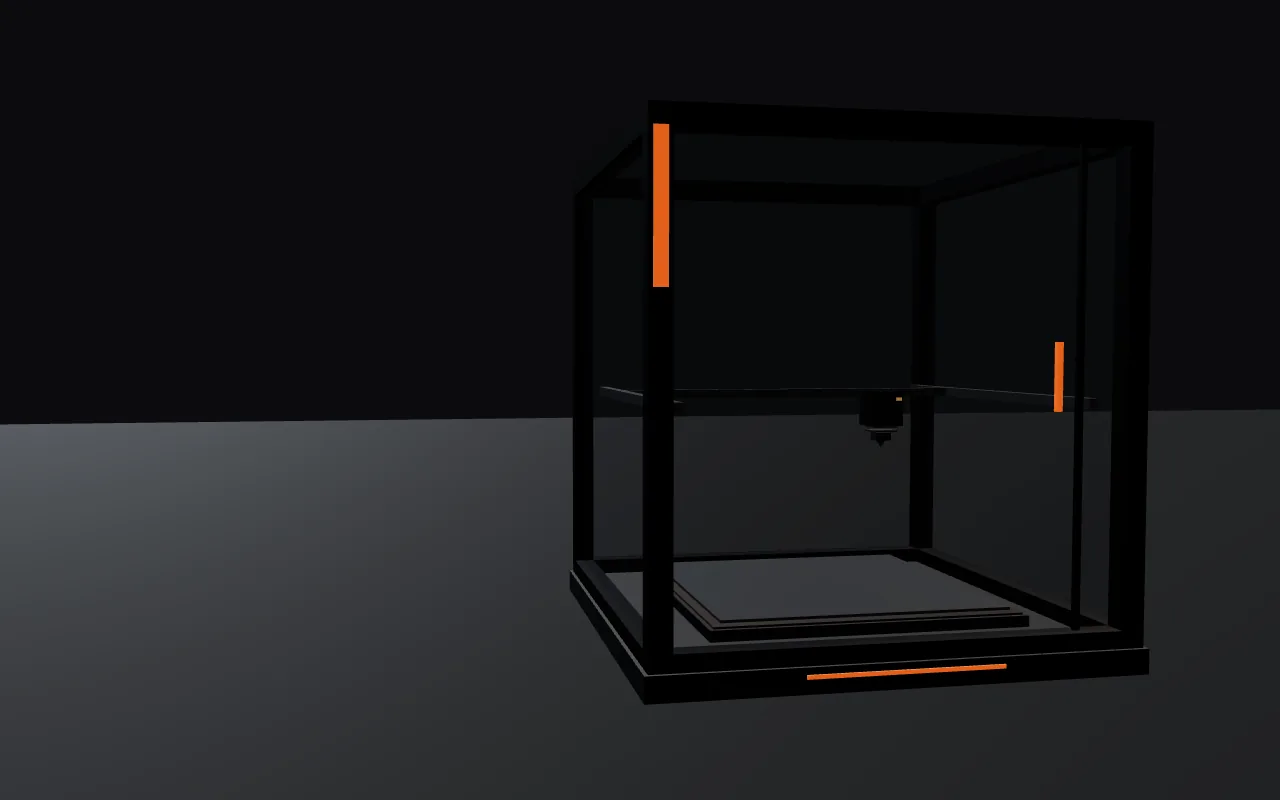
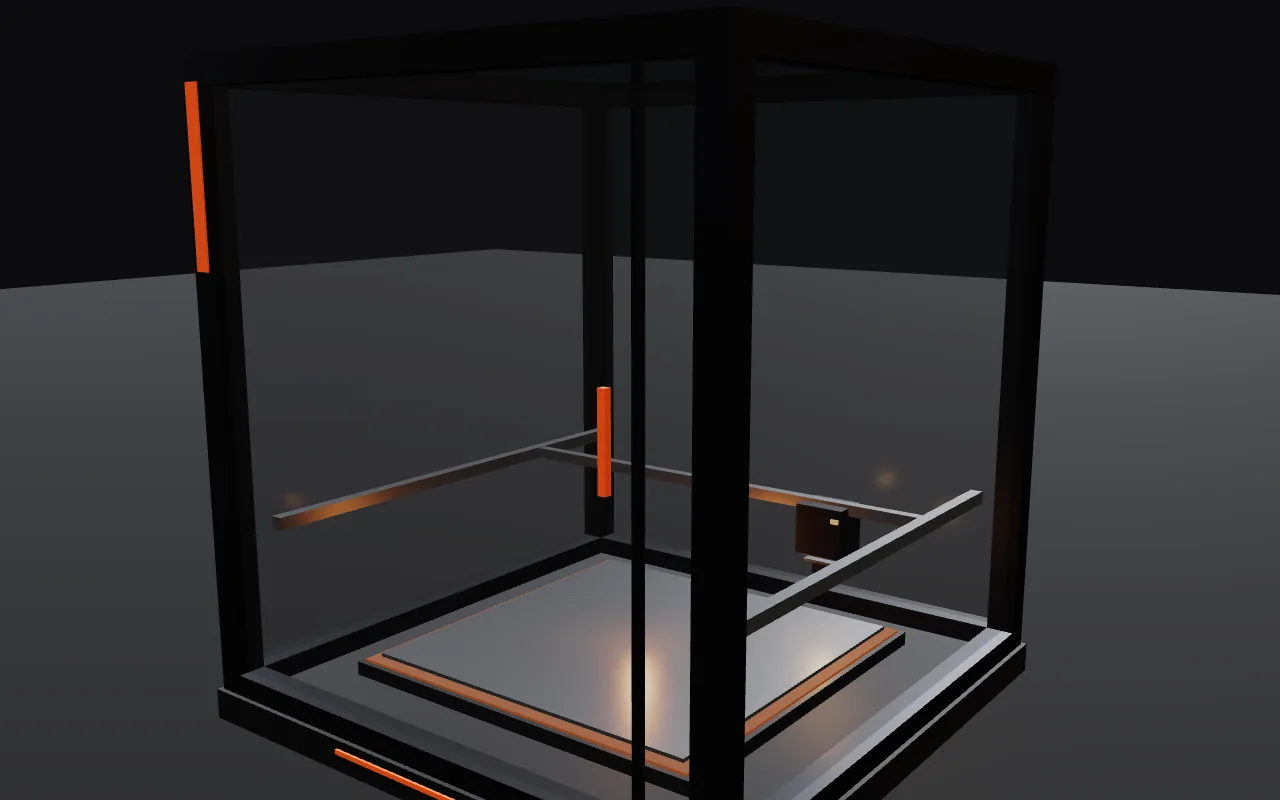
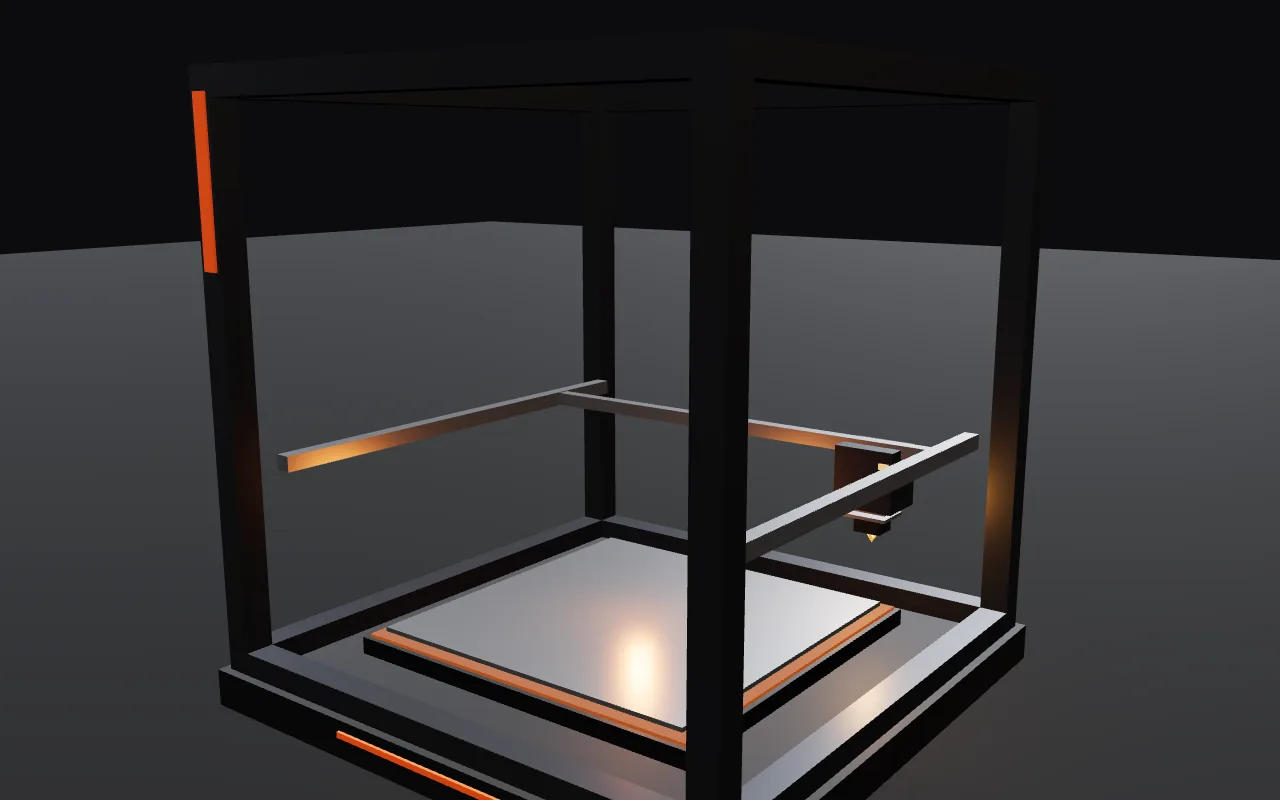
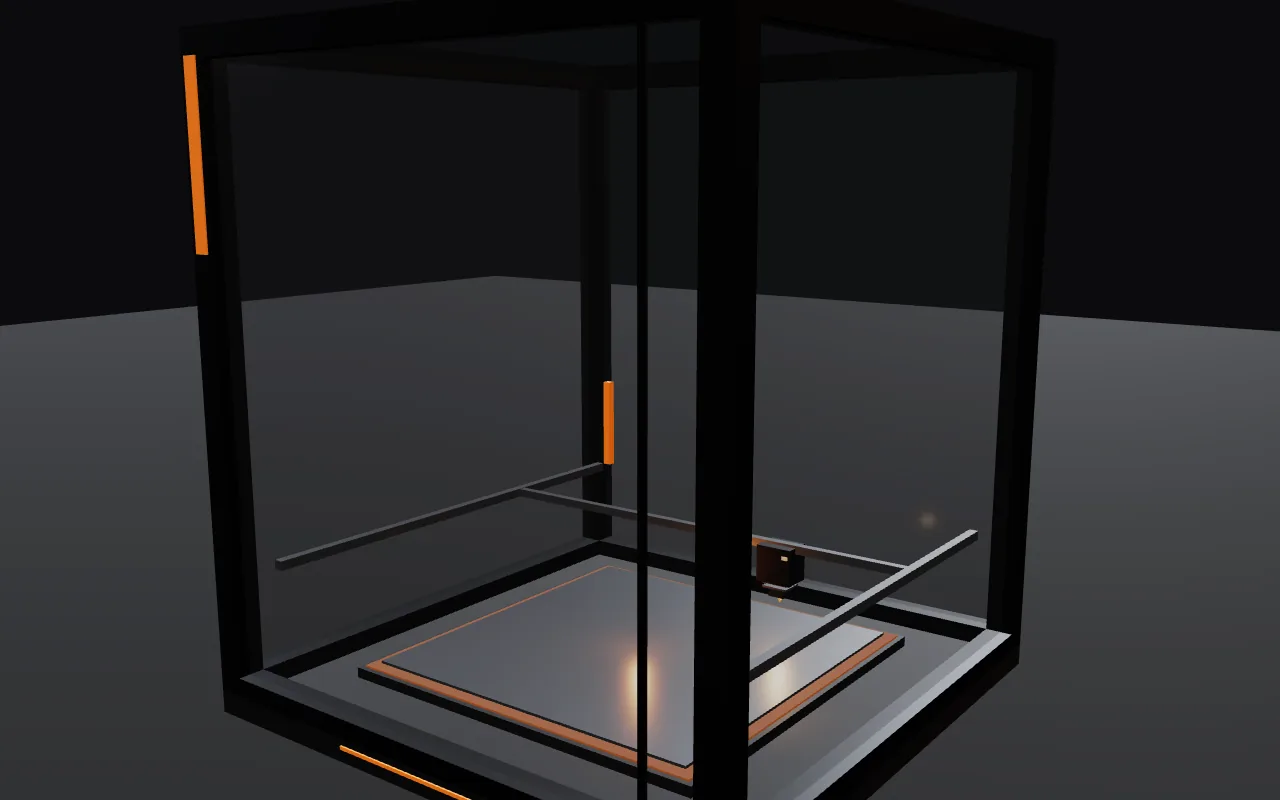
This is Basalt. No photograph on this page — the machine you're looking at is rendered live from the same geometry we machine it from.
Every part starts at 60 °C.
00 · Heat soak
Chamber sealed, bed climbing, frame expanding exactly as far as the compensation tables expect. Precision begins before the first millimeter of filament moves.
The bed is probed in 49 points.
01 · First layer
The toolhead measures the plate with the nozzle itself, then lays a first layer pressed to 80% of bore. If the first layer is right, the next 654 usually are.
Parts accrete. They don't appear.
02 · Strata
0.16 mm at a time, corner after corner, the same motion profile every lap. Input-shaped acceleration keeps the 400th layer as sharp as the 4th.
Sealed rails. 20,000 mm/s².
03 · Motion
A direct-drive extruder on machined linear rails, driven CoreXY. The gantry never guesses: every move is planned, shaped, and measured against itself.
Print 1 and print 1,000 measure the same.
04 · Chamber
A heated, sealed chamber holds the air as steady as the motion. Repeatability is not a tuning trick — it's an environment.
The last layer closes at the same 0.16.
05 · Top face
The nozzle lifts, the glow cools from amber to anodize. Six hundred fifty-five layers, one part, zero drama.
Measured, not admired.
06 · Off the plate
Nominal 104.80 mm. Measured 104.78. That difference is the whole company. Meet the machine that holds it.
Three machines. One motion pedigree.
The line
Same rails, same firmware, same obsession with the first layer — sized for a bench, a shop, or a production floor.
Filament wound to ±0.02 mm
Stratafil
Four polymers, dried and sealed in Tacoma. Each swatch below is the material's optical character — rendered, like everything else here.
The everyday spool. Dead flat finish.
Tough, slightly flexible, outdoor-safe.
ABS that survives the parking lot.
Carbon-filled nylon. Prints like a part number.
We render our machines from the same geometry we machine them from.
No photographs
There is no photo studio at Sinterra. Every image on this site — the landing sequence, the product shots, the drawings — is generated from the CAD that drives our tooling. If the picture and the part ever disagree, the picture is wrong, and we can prove it with a caliper.
Machines that clock in
In the field
We run six Basalts as a wall. The maintenance log is the boring part of my week, which is exactly what I want from a machine wall.
Basalt B1 × 641,290 h
Sockets have to fit the same person the same way twice. The Gneiss holds our tolerances across PA-CF batches without recalibration between them.
Gneiss G42,847 devices
Two Shales in the shop corner printed every duct and jig on this year's car. Students crash the car, not the printers.
Shale S1 × 2612 parts
Support that answers with numbers
After the sale